
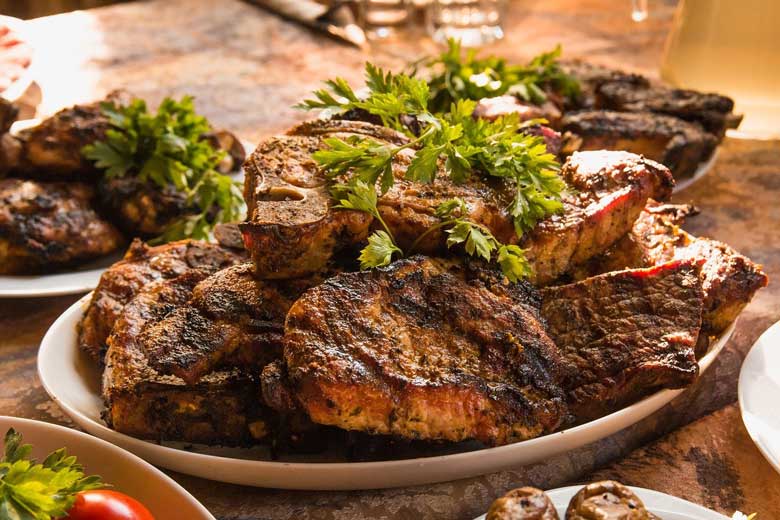
Aging or meat curing?
The aging process is understood as the effect of time on a particular food. More specifically, it’s not just about hanging meat for a while, as meat aging involves much more than that. In this sense, it leads to what is known as meat curing. Here, we explain what meat aging entails.
What is meat aging?
Curing is a more careful and meticulous process within meat aging. It involves specific treatments, environments, conditions, and positioning determined by the expert to achieve the desired effect on the meat cuts.
It’s not simply about leaving a piece of meat exposed for a period under any conditions in a cold chamber. While this method may indeed result in aging, it doesn’t achieve curing. Curing refers to the treatment applied during the aging process.
The physical and chemical changes that occur during aging must be controlled to achieve, among other things, the ideal level of meat juiciness, flavor concentration, and the correct fat content.
As the connective tissues break down slightly, the meat becomes more tender, and the flavor becomes more concentrated. However, sometimes the fats can develop rancid flavors. The longer the aging process, the stronger these unpleasant flavors can become. It is a difficult process to control, although an ideal curing process can ensure a delightful experience for even the most refined palates.

