
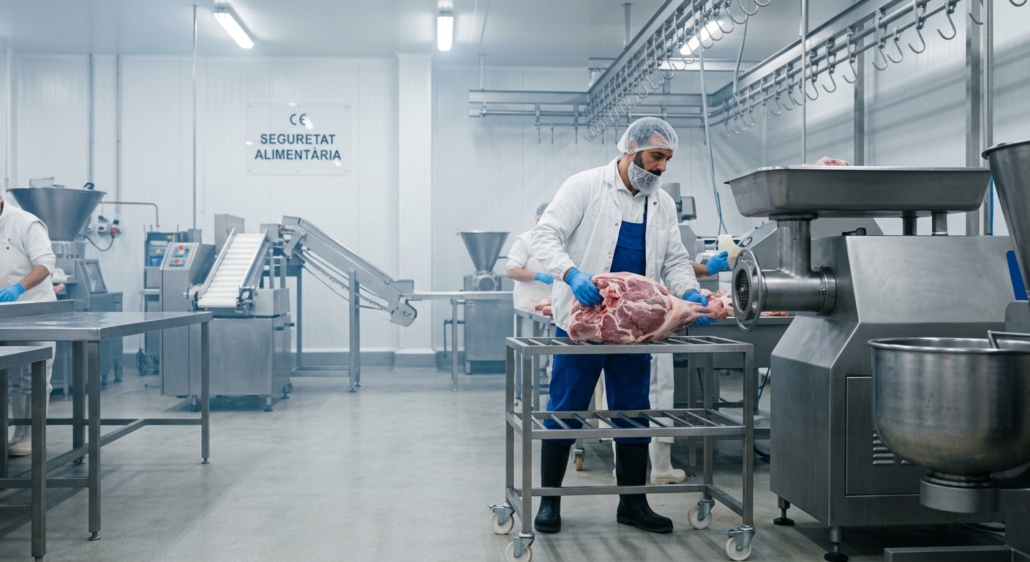
Hygienic regulations and food safety: what must meat and fish processing machinery comply with?
In the meat and fish processing industries, food safety and hygiene are critical pillars to guarantee the quality of the final product and protect consumer health. Machinery used in these sectors must comply with strict regulations and hygienic design standards.
Key aspects machinery must comply with:
-
Hygienic design and easy cleaning: Machines must be designed to prevent the accumulation of organic residues and bacteria. They must allow easy disassembly for daily cleaning and disinfection.
-
Food-grade materials: The use of stainless steel (such as AISI 304 or AISI 316) and high-density plastics is mandatory. These materials prevent corrosion and do not react chemically with food.
-
Absence of dead zones: 90-degree corners, porous welds, or crevices where dirt or stagnant water could accumulate must be avoided.
-
Certifications and European compliance: Machinery must carry the CE marking and comply with Regulation (EC) No 1935/2004 on materials intended to come into contact with food, as well as the Machinery Directive 2006/42/EC.
-
Moisture protection: Since meat and fish processing environments require high-pressure washdowns, electrical and pneumatic components must feature high ingress protection levels (IP65 or IP69K).
Ensuring equipment meets these requirements not only avoids penalties and cross-contamination, but also improves operational efficiency and machine lifespan.
