
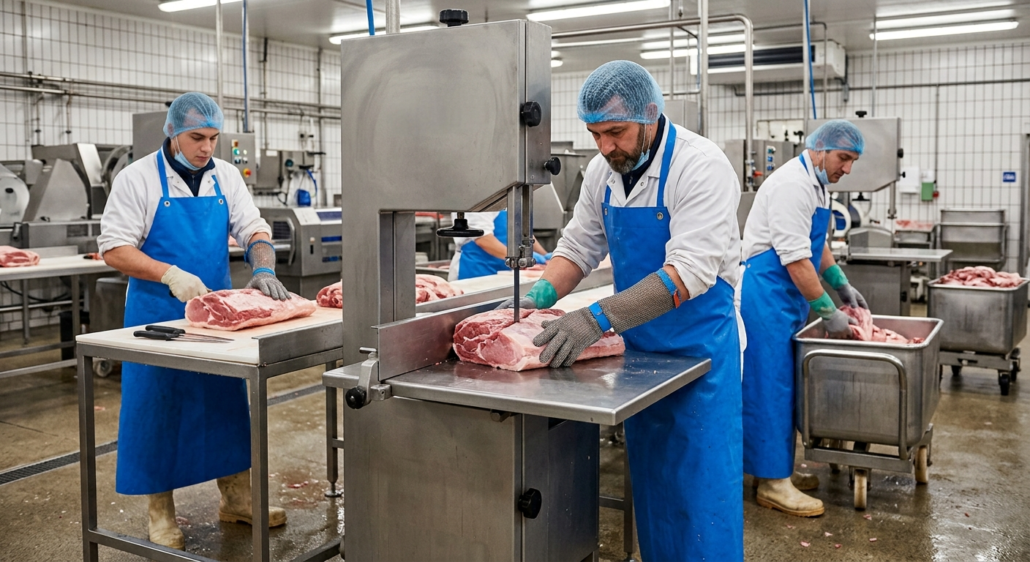
Advanced maintenance guide: how to maximize the lifespan of your industrial band saw
In the food processing sector, industrial band saws and cutting machines form the backbone of meat and fish processing operations. Subjecting these units to demanding production schedules requires a rigorous preventive maintenance strategy. An optimized maintenance routine not only extends the operational lifespan of the machinery but also reduces operating costs, improves energy efficiency, and prevents costly unplanned downtime.
To maximize the return on investment of your Cruells equipment, it is essential to focus on four critical maintenance pillars:
-
Blade sharpening, tension, and tooth set: Operating with a dull or improperly tensioned blade places excessive strain on the motor, elevating cutting temperatures and producing uneven cuts that waste raw materials. Perform daily checks on blade tension and carbide guide alignment. Sharpen or replace the band saw blade at the first indication of severe friction.
-
Specialized food-grade lubrication: Pivot points, bushings, and bearings must be lubricated regularly using NSF H1-certified lubricants suitable for incidental food contact. Proper lubrication minimizes frictional wear and halts rapid oxidation caused by the high-humidity environment of meat and fish processing facilities.
-
Pulley and scraper calibration: Fat deposits, bone fragments, and fish scales naturally build up on drive pulleys and blade scrapers. Neglecting this debris causes alignment issues, operational vibration, and eventual premature blade failure due to metal fatigue. Inspect, clean, and readjust scrapers at the end of every shift.
-
Workplace safety and non-corrosive sanitation: Operational safety demands daily verification of the motor brake, product pushers, and adjustable safety guards. During cleaning, use neutral detergents and non-abrasive sanitizers. High-pressure washing or corrosive chemicals applied near seals can degrade electronic and mechanical components prematurely.
Establishing a systematic daily and weekly inspection program ensures peak operational throughput, maintains compliance with food safety regulations, and safeguards the long-term value of your processing equipment.
