
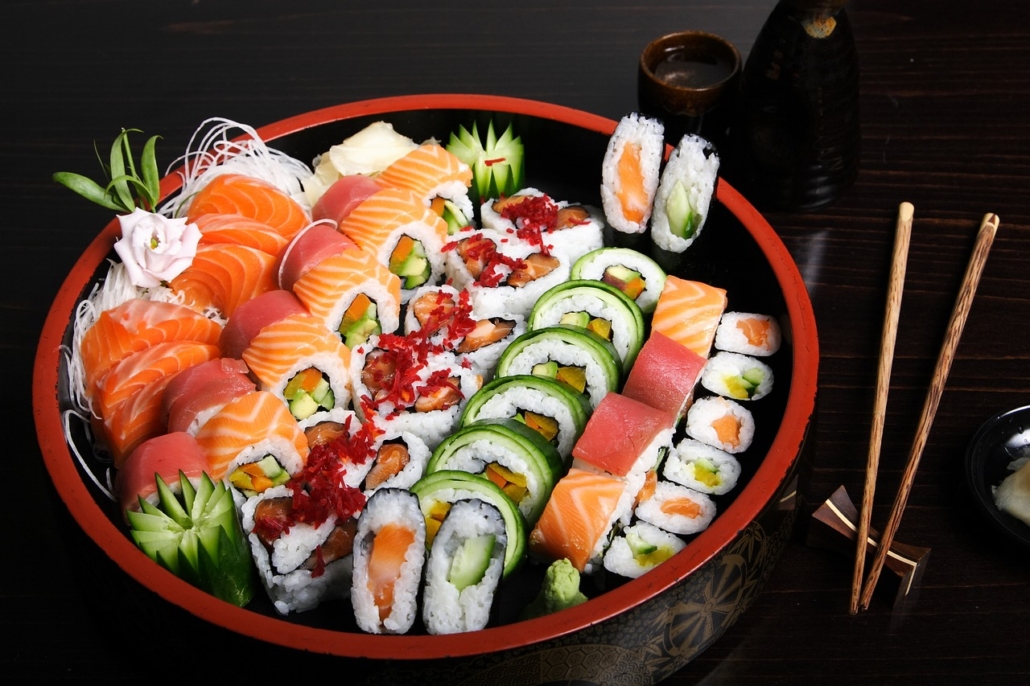
Sushi and sashimi: Japan’s raw fish tradition
Sushi and sashimi are two of the most iconic elements of Japanese cuisine, both celebrating raw fish as a symbol of freshness and purity.
Sushi combines vinegared rice with raw fish or seafood, though vegetables and other ingredients may also be included. There are many types: nigiri (a rice ball topped with fish), maki (a seaweed roll), and temaki (a cone-shaped hand roll). The harmony between slightly sweet rice and fresh fish is key.
Sashimi, on the other hand, is much simpler: thin slices of raw fish served without rice. Here, the fish itself is the star, requiring top quality and expert knife skills.
Beyond flavor, sushi and sashimi embody Japanese philosophy: respect for nature and the pursuit of perfection in simplicity. Nutritionally, they provide high-quality protein, omega-3 fatty acids, and essential minerals.
Although often confused in the West, sushi and sashimi are distinct experiences. Sushi offers a blend of textures and flavors, while sashimi showcases the purity of fish in its rawest form.
To enjoy sushi or sashimi is to embark on a cultural and sensory journey rooted in centuries of Japanese tradition.

