
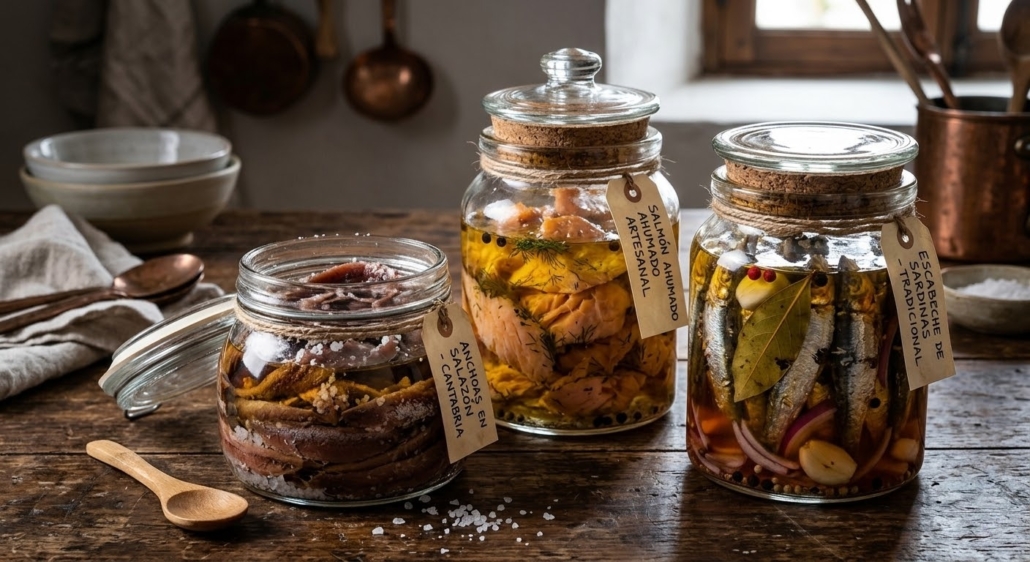
Ancient fish preservation techniques: salting, smoking, and pickling
Long before freezers existed, humans had to be resourceful to preserve surplus catches. Born from the need for survival, these techniques not only allowed fish to be transported far from the coast but also transformed it into delicacies with unique textures and flavors.
Salting: Perhaps the oldest technique, it involves dehydrating the fish using common salt to prevent bacterial growth. The most iconic example is the anchovy, which develops its reddish color and intense flavor after months of maturation, or cod, which allowed sailors to cross oceans due to its durability.
Smoking: Originating in colder climates, it combines dehydration with the antiseptic properties of smoke from hardwoods (like beech or oak). Oily fish like salmon are ideal, as the smoke penetrates the fat, creating complex nuances and a silky texture.
Escabeche (Pickling): With strong Arabic and Spanish roots, this method uses vinegar and oil. The acid in the vinegar stops decomposition, while spices like bay leaf, pepper, and paprika provide an unmistakable aromatic profile. It is the go-to technique for oily fish like bonito or mackerel.

