
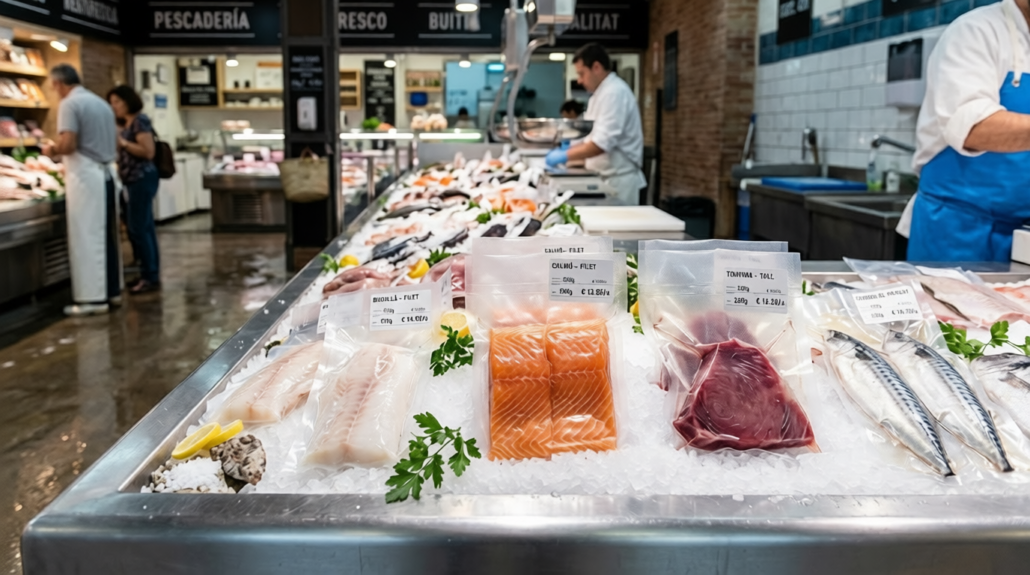
The truth about vacuum packaging: Does it really keep fish fresher?
Vacuum packaging has become the gold standard for storage in modern fish markets and high-end kitchens. However, behind the popularity of this technique, reasonable questions arise: Is it a foolproof solution or does it have technical limitations? The short answer is yes, vacuum packaging significantly improves shelf life, but its effectiveness is strictly tied to proper process management.
The science behind preservation By extracting oxygen from the bag, oxidative fat processes—the primary cause of fish rancidity, especially in fatty fish like tuna or salmon—are drastically slowed down. Furthermore, by removing air, the growth of most aerobic bacteria, which require oxygen to multiply, is inhibited. This allows the product’s shelf life to be extended up to three times longer than with conventional tray refrigeration.
Critical nuances for total safety Despite its benefits, vacuum sealing is not a substitute for the cold chain. Effectiveness depends directly on two factors:
-
Initial freshness: No vacuum machine can improve the quality of a product that has already begun to degrade. The vacuum only “pauses” the current state.
-
Controlled temperature: Certain anaerobic bacteria can proliferate in oxygen-free environments if the refrigeration temperature is not maintained below 3°C or 4°C.
When to apply this technique? Vacuum sealing is exceptional for portioning fresh fish for self-service sales or for mise en place in professional kitchens. However, it is vital not to overload the bags to ensure a uniform hermetic seal. Poor welding or a puncture caused by a fish bone completely voids the benefits. In short, it is a powerful tool that, combined with scrupulous hygiene, ensures a product with greater freshness and minimal waste.

